Tag: anxiety

  • The Silent Pandemic: Rethinking Mental Health Access

    The Silent Pandemic: Rethinking Mental Health Access

    Digital Mental Health: A Revolution for Youth Wellbeing

    “I think a lot… and I wish I didn’t exist, so I wouldn’t have to keep feeling this way.”

    This isn’t a line from a tragic novel. It’s the raw, unfiltered answer of a medical student in an African country—one of many we spoke to years ago in a mental health survey that asked: Have you ever thought about harming yourself?

    I still can’t bring myself to share her full response. Or those of her peers—each one echoing pain so deep it feels dangerous to read. Just seeing their words on paper filled me with tension, grief, and fear.


    Are We Paying Attention—Or Ignoring a Silent Pandemic?

    The World Health Organization confirms: depression and anxiety are among the leading causes of illness and disability in young people aged 10–24.

    These aren’t abstract statistics.

    They’re sitting next to our children in classrooms. They’re the siblings of our coworkers. They’re in our neighborhoods. They may even be our own sons and daughters—hiding behind silence.

    And yet, access to mental health care remains broken—even in wealthy nations. In low- and middle-income countries, it’s nearly nonexistent. Shortages of professionals, crushing costs, and deep-rooted stigma block the path to help.

    If the current system isn’t working—why do we keep clinging to it?


    A Glimpse of Hope: What Students in Sudan Told Us

    Years ago, we surveyed university students in Sudan about digital mental health tools. The results were striking: over 70% said they were willing to try a teleconsultation for mental health treatment.

    Why? Because it’s private. Affordable. Accessible.


    What Digital Mental Health Could Look Like

    • Imagine a young man in a remote village, miles from the nearest clinic, scrolling through his phone at night—exhausted, hopeless. But instead of despair, he opens an app and finds cognitive behavioral therapy in his language, voice messages from a counselor, a safe space to breathe.
    • Picture a female university student overwhelmed by academic pressure and family expectations, too afraid to speak aloud—yet texting anonymously with a therapist through a secure platform.
    • Or a rural mother, isolated and struggling with postpartum depression, listening to guided mindfulness sessions on her basic smartphone while her baby sleeps.

    The Tools Are Here—Why Aren’t We Using Them?

    Digital mental health—mobile apps, teletherapy, AI-supported chatbots, online CBT—can bridge gaps no traditional system ever could.

    It bypasses borders. It slashes costs. It reaches anyone with a mobile phone. And believe me: billions have one.

    So why aren’t global institutions acting?
    Why aren’t we building regulated, scalable, equitable digital mental health systems—as widespread as social media, as accessible as WhatsApp?

    All we need is imagination. Will. Coordination.


    Final Call to Action

    The suffering is real. The tools are here.
    The time for transformation is now.

    👉 If you believe in a future where no young person feels invisible in their pain—share this post, start the conversation, and push for digital mental health innovation.

    Sara


  • Facing the Fear of Flying: Personal Insights and Tips

    Facing the Fear of Flying: Personal Insights and Tips

    A single, tragic aviation incident recently hijacked my peace of mind. It wasn’t just another headline—it was a devastating crash minutes after takeoff, claiming dozens of lives in the air and on the ground. I didn’t just read about it. I lived it—every detail, every victim’s story, every grieving family member shared online. I felt their pain like it was mine.

    And suddenly, my old companion—flying anxiety—came roaring back, louder than ever.

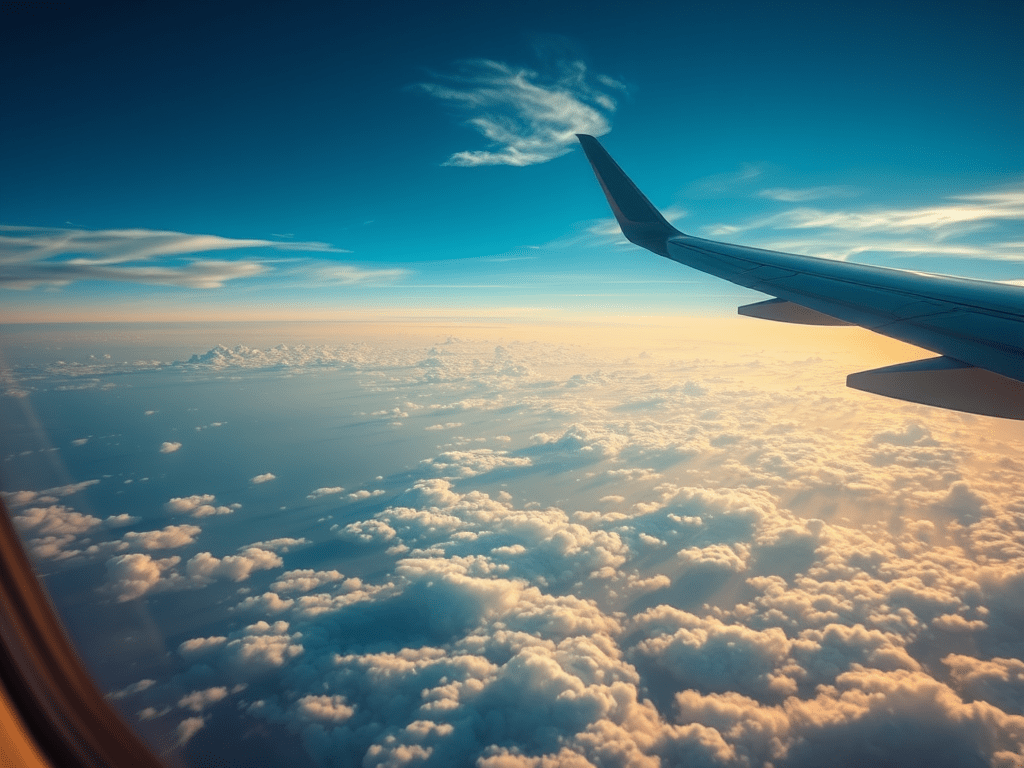
    I’ve always had a mild fear of flying. Nothing extreme—just that familiar knot in the stomach during turbulence, the white-knuckle grip on the armrest when the plane hits an air pocket. But over the past year, it’s grown. Sharper. More persistent. The breaking point? A 14-hour nonstop flight with no incidents—no technical issues, no delays, no rough weather. Just me, trapped in my own head, obsessing over every creak of the cabin.

    The flight itself was fine.
    But my mind wasn’t.

    For days after landing, I couldn’t enjoy where I was because all I could think about was the return journey. That dread seeped into my entire trip, robbing me of joy, focus, and presence. And now, after this recent tragedy, it’s worse. My inbox is flooded with news alerts: planes skidding off runways, mid-air collisions, emergency landings, private jets crashing into fields. Big airlines, small charters—nothing feels safe anymore.

    So I started wondering:
    Are plane crashes actually becoming more common?

    Or is it just that we’re hearing about them more?

    Here’s what the data says: commercial aviation is still one of the safest ways to travel. According to the International Air Transport Association (IATA), in 2023 there were only 5 major accidents involving passenger jets worldwide—and just 1 fatal accident. With over 37 million commercial flights that year, that’s an accident rate of less than 0.00001%. Statistically, you’re far more likely to be injured driving to the airport than flying across continents.

    But here’s the catch: our brains don’t care about statistics.

    Anxiety doesn’t listen to logic. It feeds on images, stories, and worst-case scenarios. And thanks to social media algorithms, every time I search for flight updates or watch a documentary about aviation, my feed floods with crash footage, survivor interviews, and dramatic headlines. The internet remembers my fear—and serves it back to me, amplified.

    That’s when I realized: my anxiety wasn’t just about flying.
    It was about loss of control.

    Sitting in that metal tube, 35,000 feet above the earth, I can’t steer, can’t see the runway, can’t predict the weather. All I can do is surrender. And for someone who likes to plan, to anticipate, to feel prepared—that’s terrifying.

    So I stopped fighting the fear. Instead, I sat with it.

    I asked myself: What exactly am I afraid of?
    Not “crashing.” That’s too vague.
    Is it the noise? The turbulence? The idea of not being able to escape?
    Turns out, it’s the anticipation—the waiting, the imagining, the mental rehearsal of disaster.

    Once I named it, I could work with it.

    Now, when anxiety creeps in weeks before a flight, I don’t push it away. I acknowledge it. Then I replace it.
    I visualize the journey going smoothly. I imagine walking through the terminal calmly, boarding without hesitation, feeling the hum of the engines as a lullaby, not a threat.

    On the plane, I practice gratitude.
    Thank you for this seat. Thank you for skilled pilots. Thank you for safe skies.
    I picture the plane descending gently, touching down softly, rolling to a stop at the gate. If it’s a new destination, I watch videos of the airport, study the layout, imagine myself walking through arrivals, smiling, free.

    And I bring work—drafts, essays, ideas I love to write about. Because when I’m immersed in something meaningful, time flies. Literally.

    This isn’t a magic cure.
    Some flights are still harder than others.
    But I’m no longer letting fear cancel trips, silence opportunities, or steal my peace.

    Because here’s the truth:
    Anxiety wants you to believe danger is everywhere.
    But life? Life happens despite risk—not because it’s perfectly safe.

    And I refuse to miss it just because I’m afraid of the sky.

    If this resonates with you, I’d love to hear your story. Share it with someone who understands—or drop a comment below. You’re not alone.

    Sara