
Survivor’s Guilt: Thriving in Crisis
January 2020. COVID-19 was gathering its full force, preparing to strike the world like nothing we had seen before.
At the time, I was working a full-time job—physically and mentally demanding—while quietly battling a number of scattered health issues. What I really needed, more than anything, was rest. Deep rest. A pause. A chance to breathe, reflect, and heal.
And then, as if on cue, the world changed.
Every news channel, every screen, every conversation became consumed by the pandemic. Uncertainty and fear spread as fast as the virus itself. Governments scrambled to respond to an unprecedented crisis. People were scared—of the unknown, of getting sick, of losing loved ones, of losing their livelihoods. You saw it all. The anxiety was everywhere.
Then came the lockdown. 🚪
Overnight, everything stopped.
To most of the world, it felt like a crisis.
To me? It felt like a gift from God. ✨
My 40 hours of in-person work each month shrank to just four hours online. No commuting. No errands. No social obligations. Just home. Just silence. Just time.
For the first time in months—maybe years—I had space. My body began to recover. My mind slowed down. I slept better. I breathed deeper. I was, honestly… happy. 😌
While the world grieved, I was at peace.
I was thankful. Even joyful.
And that joy came with a quiet shadow: guilt.
People around the globe were suffering—getting sick, losing jobs, losing family members, stranded across borders. Lives were unraveling.
And here I was… grateful. At peace. Healing.
So I asked myself: Shouldn’t I be sad? Shouldn’t I feel more empathy?
🧩 The Psychology of Feeling Guilty for Not Feeling Guilty
What I was experiencing was a subtle form of survivor’s guilt—not because I survived a tragedy while others didn’t, but because I thrived in circumstances that crushed so many.
Survivor’s guilt isn’t limited to war zones or natural disasters. It shows up in quieter ways:
- The person displaced by conflict who finds safety and opportunity abroad 🌍
- The business owner whose services suddenly become essential during a crisis 💼
- The freelancer who flourishes during an economic collapse while others lose everything 💻
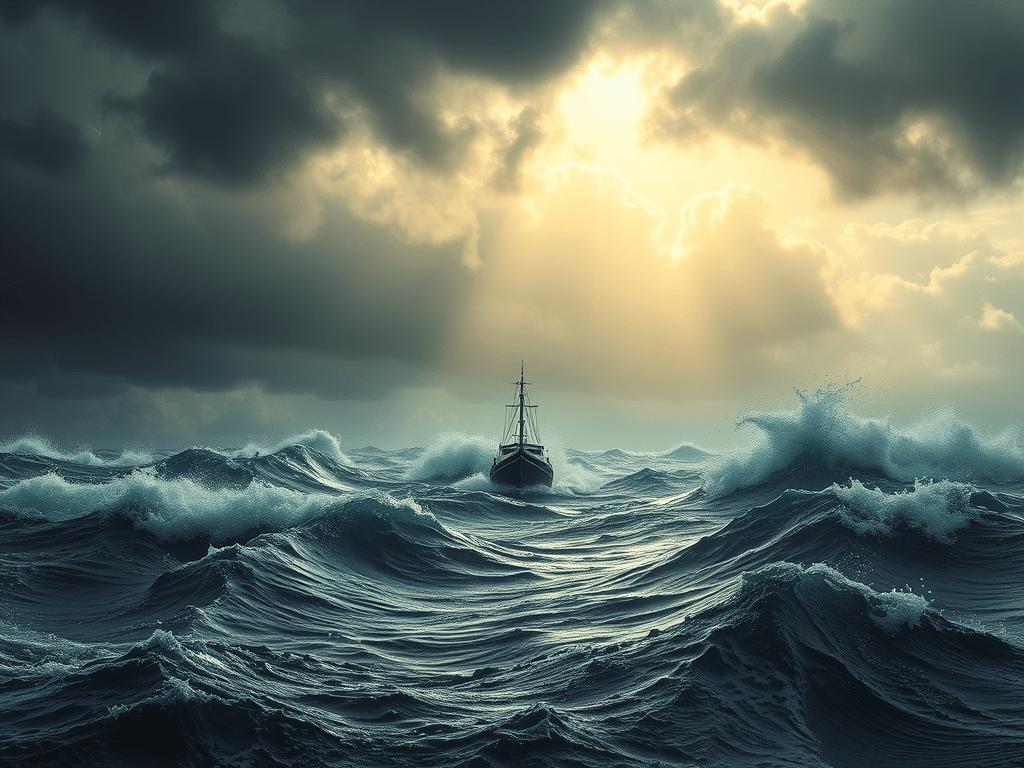
Sometimes, in the middle of a global storm, one person finds shelter. That doesn’t mean they’re ignoring the rain—it just means they’re finally dry. ☔
When we feel okay—even good—during a collective crisis, our minds often rebel. On one side: gratitude for the unexpected relief. On the other: a quiet, insistent voice whispering, How can you feel this way when others are suffering?
This is what psychologists call meta-emotion—an emotion about your own emotions. In my case, it wasn’t just happiness I was feeling. It was guilt about being happy.
A loop formed:
You’re not sad. You should be sad. Therefore, you’re failing.
As if our emotional states must always mirror the global mood.
But here’s the truth: emotions are not moral judgments.
💡 What Was Really Happening Inside Me
🧠 Cognitive Dissonance
My internal reality—relief, rest, recovery—clashed with the external one: a global tragedy. My brain struggled to reconcile the contradiction: How can I feel good when the world feels bad?
The easiest resolution? Guilt. My mind punished me for not following the expected emotional script.
🧠 Social Norms and Emotional Expectations
Society assumes that during collective trauma, everyone should feel sorrow, anxiety, or grief. When we don’t, we feel like we’re failing a moral test. But emotions aren’t moral choices. They’re responses to personal context.
🧠 The Gift of Reduced Allostatic Load
For people with chronic stress or health issues, the lockdown wasn’t just a disruption—it was a decompression:
• Less commuting = lower cortisol 🚗
• Fewer social demands = reduced cognitive load 🗓️
• More sleep = better immune function 😴
The pandemic was a tragedy.
But for some of us, it was also a rare moment of stillness—of breath, of recovery, of unexpected grace. 🌱
By the end of the year, my health was better than it has ever been. 💪
Because healing doesn’t have to wait for permission.
And peace doesn’t have to apologize for existing—
even in the middle of a storm. ⛈️
And that doesn’t make us bad.
It makes us human. ❤️
— Sara
💬 Did you feel something similar during the pandemic—or during another crisis? I’d love to hear your story in the comments. Let’s start a conversation. 🌍✨
 Citizen of our Earth